
.png)
Procurement has shifted from being a back-office support function to a strategic driver of growth, innovation, and resilience. But not every organization is at the same point in this journey.
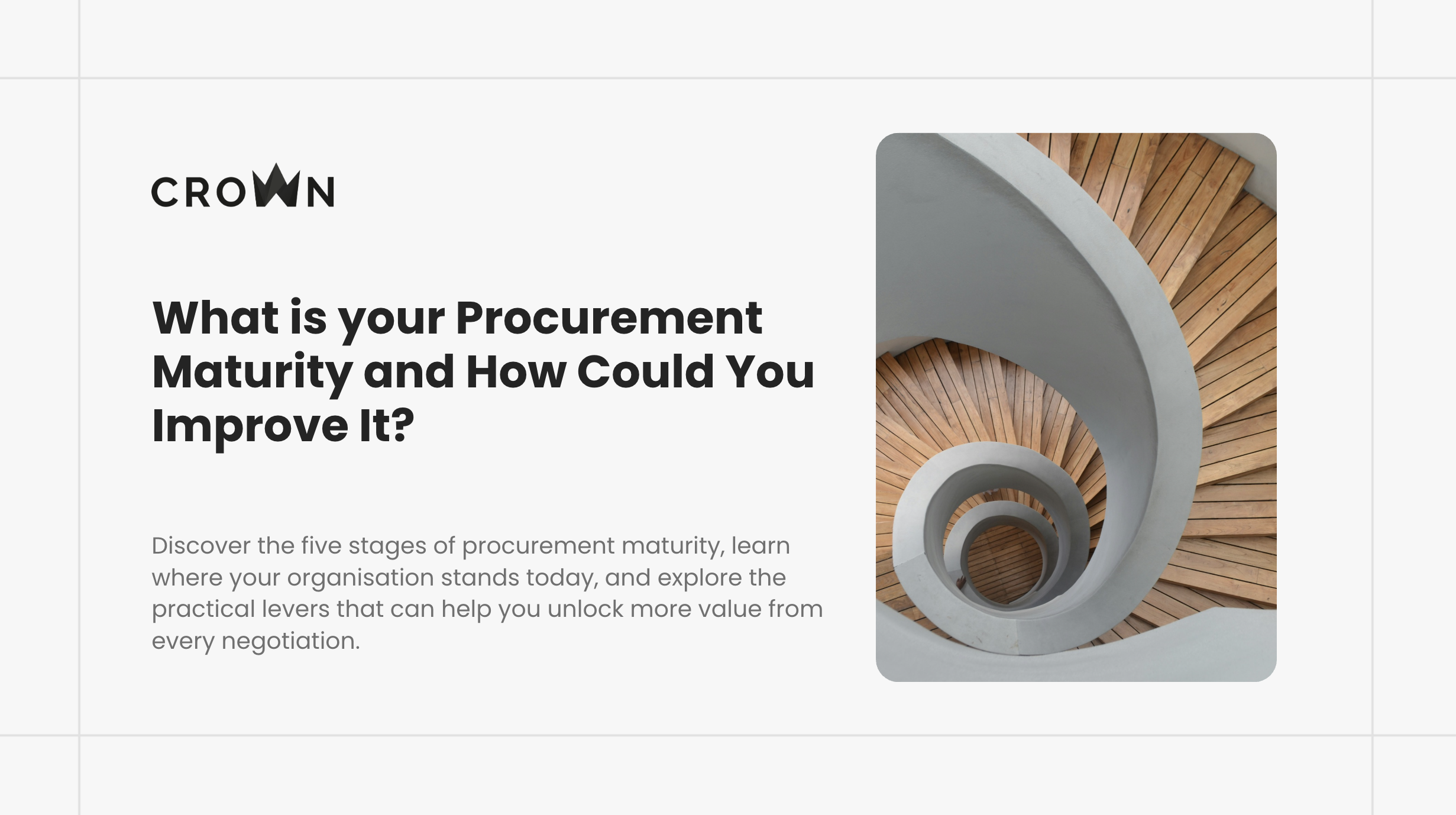
The Procurement Maturity Model helps companies benchmark their current capabilities and define a roadmap for improvement. By identifying which stage of maturity you are in, you can evaluate your procurement function against best practices and determine how to evolve toward greater efficiency, influence, and value creation.
What Is Procurement Maturity?
Procurement maturity describes how advanced an organization’s procurement function is across areas like:
- Organizational role and influence
- Negotiation and supplier management
- Processes and operating models
- Use of technology and analytics
- Contribution to business strategy
Organizations progress through five stages of procurement maturity, from tactical order processing to becoming a strategic transformation hub.
The 5 Stages of Procurement Maturity
Stage 1: Order Execution
- Procurement seen as administrative support
- Focused on processing orders and resolving requests
- Little to no supplier strategy or competitive sourcing
Research insight: Companies at this stage operate reactively, with high inefficiencies and no long-term planning.
Stage 2: Structured Procurement Management
- Adoption of standardized processes and spend visibility
- Negotiations cover price and lead time, but remain transactional
- Procurement begins to centralize under operational leadership
Research insight: Savings can be achieved, but procurement is still excluded from strategic decisions.
Stage 3: Structured Purchasing Function
- Procurement recognized as a strategic function
- Category management and supplier collaboration introduced
- Processes optimized and standardized
Research insight: At this stage, procurement starts to drive economic and quality performance while managing supplier risks.
Stage 4: Integrated Procurement Function
- Procurement fully embedded in strategic planning
- Engaged early in product/service design and client initiatives
- KPIs expand beyond cost to risk, sustainability, and innovation
Research insight: Cross-functional collaboration positions procurement as a business partner and innovation enabler.
Stage 5: Strategic & Transformation Hub
- Procurement leads innovation and ESG initiatives
- Uses AI, forecasting, and market intelligence to shape strategy
- Operates across all functions (HR, Finance, R&D)
Research insight: At this stage, procurement becomes a source of competitive advantage and a driver of long-term transformation.
Why Researching Procurement Maturity Matters
Studying your procurement maturity is not just about classification — it provides a framework for:
- Benchmarking against industry best practices
- Identifying capability gaps
- Prioritizing investments in people, process, and technology
- Building a roadmap toward procurement excellence
Organizations that conduct a procurement maturity assessment can translate insights into measurable improvements in cost savings, supplier partnerships, and business impact.
How to Benchmark Your Procurement Function
To accurately identify your stage:
- Assess your procurement’s role in the organization.
- Evaluate supplier management practices and strategies.
- Review your processes and level of standardization.
- Measure alignment with business objectives.
- Examine use of digital tools, analytics, and innovation levers.
The Procurement Maturity Model is a research-backed framework that allows organizations to map their procurement journey and define what’s next.
Whether you are just beginning with order execution or already building a strategic transformation hub, understanding your procurement maturity helps you make informed decisions and build a procurement function that delivers lasting value.