
.png)
The Strategic Role of the Scope of Work (SOW) in Procurement Sourcing
In the transition to digital procurement, organizations often focus on negotiation formats and automation tools while overlooking the fundamental requirement of a successful sourcing event: the Scope of Work (SOW). After facilitating over €100M in eAuctions , I have observed that even the most advanced scenarios cannot compensate for a poorly defined scope. A vague SOW is the primary driver of supplier "drifting" , the "winner's curse" , and post negotiation disputes.
Defining the Scope of Work (SOW)
A Scope of Work is a foundational document that specifies the activities, deliverables, and timelines a supplier is expected to execute. In strategic sourcing, the SOW establishes a level playing field. Without clear alignment, market forces cannot accurately determine a fair outcome because bidders may be pricing different assumptions of complexity.
Essential Components of an Effective SOW
- Detailed Requirements: Every item that will eventually appear on an invoice must be specified in the SOW.
- Milestones and Deliverables: Definitions of completion are necessary to prevent value leakage during contract execution.
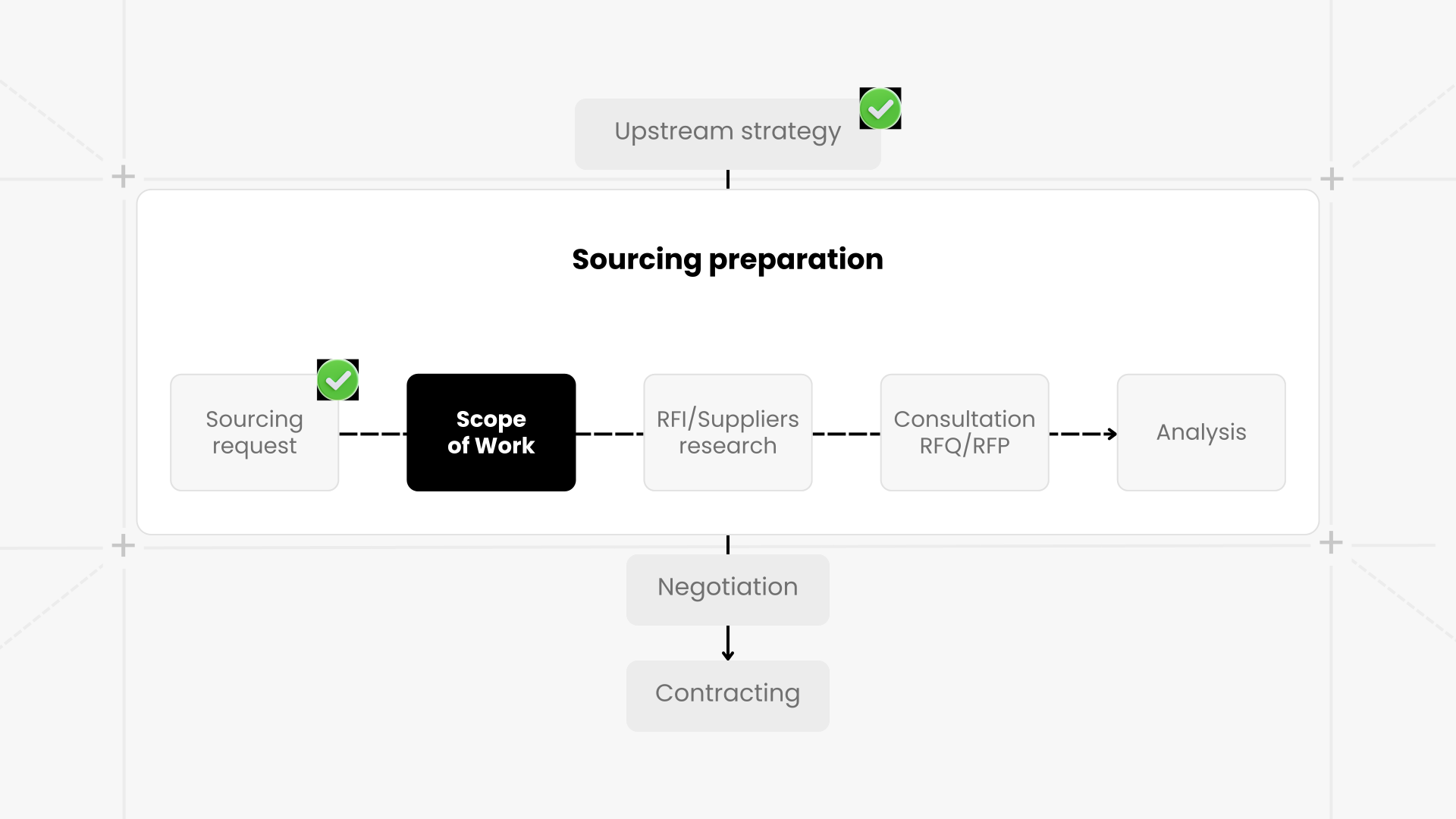
- Project Timeline: The SOW must align with the sourcing process phases, from technical pre-qualification to the final commercial round.
- Acceptance Criteria: Benchmarks for quality and service levels ensure only pre-qualified suppliers participate in the bidding.
The Strategic Value of the SOW in Sourcing
A rigorous SOW is not merely administrative; it is a strategic lever that directly impacts the commercial outcome of a tender.
1. Mitigation of the "Winner’s Curse"
The "winner’s curse" occurs when a supplier bids too low because they underestimated the project's true cost or complexity. When an SOW is ambiguous, suppliers often build a risk premium into their bids to protect themselves from this uncertainty. A precise, transparent SOW removes these valuation blinders, allowing suppliers to bid their true reservation price.
2. Facilitation of Total-Value Negotiations
A common misconception is that e-negotiations are limited to price. By integrating non-price parameters into the SOW — such as warranty periods, payment terms, or CO2 impact — procurement teams can utilize Total-Value Models. This allows the sourcing platform to calculate a "comparable rate" in real-time, ensuring that supplier selection is based on the highest overall value rather than the lowest unit price.
3. Prevention of Supplier "Drifting"
Suppliers "drift" when they participate in a negotiation without the intention of winning at their best price, often due to a lack of trust in the buyer's commitment or the scope's clarity. A professional SOW, coupled with a formal Bidder Agreement, ensures that all participants acknowledge the requirements as legally binding.
Adapting your Scope of Work based on your Market
The approach to drafting an SOW varies based on the industry environment, as categorized by the A.T. Kearney Strategy Chessboard.
- Position and Conquer (High Predictability): In stable, predictable markets, the SOW should be rigid and granular. The objective is cost-effective execution of a well-understood commodity or service.
- Reinvent the Industry (Low Predictability): In revolutionary or highly uncertain environments, a flexible SOW is often required. This may involve Combinatorial E-Auctions, where suppliers are permitted to propose their own "bundles" or synergies to identify hidden value.
- Shaping the Industry: In situations where a company has the power to influence market development, the SOW becomes a tool to set new standards for sustainability, technology, or conduct.
The Future of Scope Definition and Automation
As procurement moves toward Autonomous Negotiation Agents, the role of the SOW is evolving. AI-enabled solutions are increasingly capable of analyzing internal consumption data and external market trends to generate value functions automatically.
We are seeing the rise of Chatbot Negotiators — as seen in deployments at firms like Walmart — which can manage thousands of tail-spend negotiations simultaneously based on pre-defined SOW parameters. In this automated future, the sourcing professional's role shifts from manual price haggling to the strategic definition of the parameters — the SOW — that govern algorithmic decision-making.
Conclusion
A SOW is not a static administrative requirement; it is a critical negotiation tactic. It serves as the bridge between transactional purchasing and a strategic, world-class sourcing program. To achieve sustainable savings and maintain professional supplier relationships, procurement teams must prioritize the precision of the "what" before engaging in the "how" of a negotiation.